On changing morals
A glimpse on not universal ethics

I will take some of the most discussed topics in 2021 such as slavery, abortion, paedophilia and view them in the context of universal morality.
Now I forget about any ethical values I have inside me. I advise you to do the same, dear Reader. In order to reach the top of the mountain and be able to discover the truth, we need to get rid of our heavy baggage from our back which presses us to the ground not allowing us to go farther. You will take with you what you left behind while you will be coming back from the summit.

Abortion, paedophilia and slavery
A certain woman who had taken the vow of chastity fell, through the youthful desire of pleasure and her womb swelled with child. Brigid, exercising the most potent strength of her ineffable faith, blessed her, causing the child to disappear, without coming to birth, and without pain. She faithfully returned the woman to health and to penance. - Cogitosus' Life of St. Brigid the Virgin
This is the description of the miracle performed by St. Brigid the Virgin. She made a fetus of a nun literally disappear. If you cause an adult person to vanish from the face of the Earth, you would basically kill him/her without leaving any trace. A very similar story comes with the legend of St. Ciarán of Saigir. These were the early days of Christianity. On what would you base your moral judgement of the actions of these Irish saints?
Spartans were bathing newborn babies in wine to see their reactions. If infants’ seemed acting “weak”, ancient Laconians were throwing them off a cliff or enslaving them. In Sparta, the relationships between teenage boys and older men were accepted, similarly as in Athens where sex between 12-year-old males and adults was something normal. How would you approach the moral judgement of Spartans or Athenians?

Slavery has existed for thousands of years. The Code of Hammurabi (c. 1760 BC) includes laws such as “If the slave will not give the name of the master, the finder shall bring him to the palace; a further investigation must follow, and the slave shall be returned to his master.”. Even the Bible mentions slavery as an established institution. You could own the people in Western civilization even in the 20th century. An estimated number of slaves nowadays ranges from 38 to 46 million people. What would you take into account while making the decision whether condemning people and their actions when it comes to taking part in ownership and trading slaves especially in the past?
The past, the present, the future
Let’s imagine that technological progress would lead us to a work-free environment for most humans. In consequence, it could result in common high universal basic income earned for people by the work of robots. Additionally, let’s imagine that social changes continue to transform towards instant gratifications, focus on avoiding bad feelings and freedom viewed as a possibility to act according to the will and impulses of the person, if they don’t do any direct harm to someone else.
What are, of course not certain, but realistic scenarios which could happen if one day the world would look like that?
It is possible that employment, as we understand it, will be viewed as a form of system slavery. Of course, if you hire someone, you don’t directly own them. However, what options your employees have if you lay them off? The salary paid regularly every month, makes most of the people fit their lifestyle to the money they receive, at some point making themselves dependent on their current employer.
Monogamous relationships with, at least officially, one unique sexual partner are dominant in our culture. In the same moment, they don’t go together with our deep instincts. Despite our parental’s and romantic feelings, if we let our natural impulses out, we would certainly want to have multiple sexual partners. You can’t rule out the chance that in the future, if the approach towards sexuality, reproduction and partnership will be more liberal than today, limiting your partner’s sexual instincts will be perceived as blackmailing and stealing their freedom.
In most of the cultures eating meat, transportation or farming with the help of, for example, horses or donkeys, as well as manufacturing products is still common and widely accepted. However, rising empathy, compassion towards animals and convergence of their and human rights may sooner or later result in the imposed ban for killing them.
How would the people living in such a world view you, dear Reader, from their ethical perspective?
If the people of the future outlined above would judge you or your actions as morally evil for being an employer, not allowing your partner to have sexual encounters with others or eating meat (as well as such things like trophy hunting or going to zoos), what would you think about it?
It would be projecting their morals onto your life, not taking into account the changes which occurred in that aspect.
God’s law
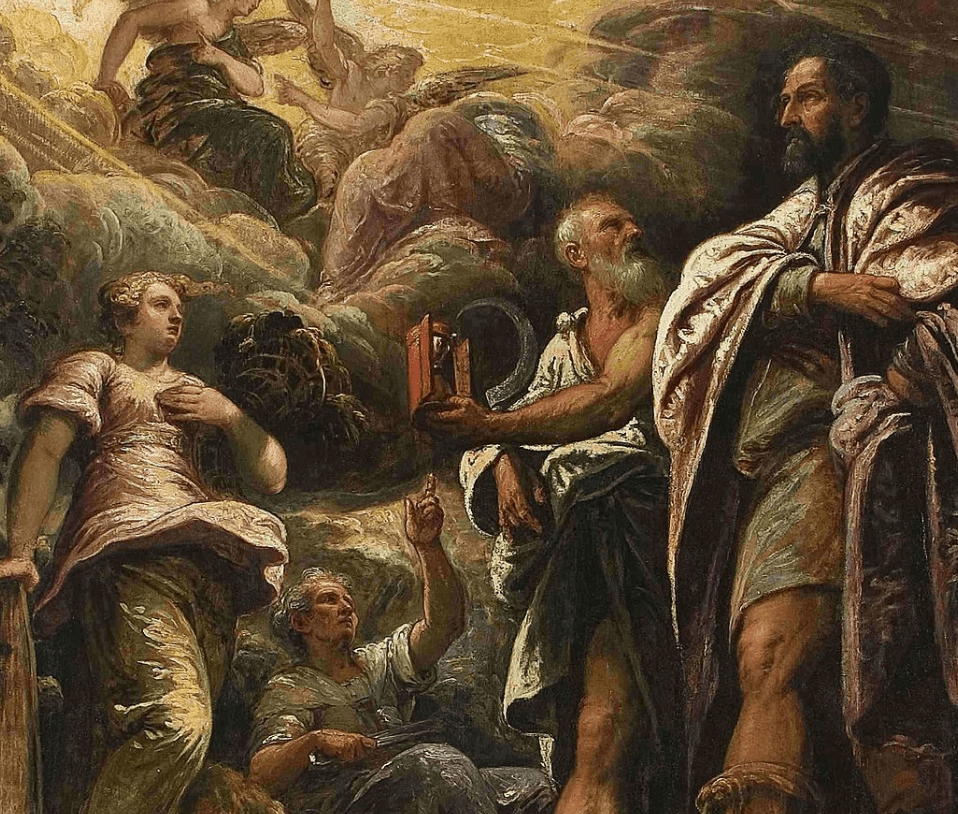
Moral relativism has a pejorative meaning. It is interesting why is that? There is no unique moral relativism. It is common to divide it into three types: descriptive, meta-ethical and normative. Descriptive moral relativity states that there are various ethical values. The meta-ethical version adds that not only there are different morals, but also it’s incorrect to judge which are “right” or “wrong”. Normative moral relativity is the meta-ethical thesis, plus that we should be ok with another behaviour, even if it contradicts cultural moral standards. From now on, when I write about moral relativism, I mean cultural meta-ethical one.
The opposite of moral relativism is the concept of universal principles. You can also call them God’s laws. What an irony, that this concept, let alone values themselves, has been changing over time.
Common abortion and abortion ban; accepted homosexuality and oppression of homosexuality; paedophilia, pederasty, marriages of kids and the protection of minors; common slavery, ownership of people, right to kill or completely destroy another human and protection of inherent human rights, freedom of a human entity - all of these were moral and immoral throughout different times and cultures. These are the customs, not universal laws.
We imagine people living in different ethical circumstances as unhappy, suffering human wrecks dreaming about being born in our moral paradise. Well… I would not be so sure about that. Of course, this is speculation. Probably we would never be able to verify that. What’s more, the bias of moral high ground is not unique for our time.
However, it is visible that morality is to a great extend part of identity and customs rather than universal laws.


What’s next?
Judging people or their actions as good or evil from the current moral perspective is a present narrative. It has nothing to do with the reality of the past. If you believe that the subjects of your judgement were not aware of the evil they did, you are still looking from the present. The notions of what is morally good and bad have been changing over time. If any reasonable judgement of the people of the past exists is possible, then it would involve comparing the actions of the morals of that time, not of the present. Not only that, if we go much enough back in time, there was no ethics as we understand it.
When it comes to moral relativism, denying it is the result of religious faith, cultural war or unfounded idealism. For now, I don’t find any other possibility (feel free to send your ideas). I will be completely sincere with you - I empathize with a trustful faith in God’s laws. I also understand using morals as information warfare to direct fear and anger towards the enemy coming from a different civilization or culture. But these are faith and useful lies. If we have intellectual discourse, even from the religious standpoint, rejecting moral relativism, then it is just an unfounded idealism.
I’m not for rejecting morality. Even if it’s a “social construct”, the fact that it’s not physically real and objectively universal, is not an argument for “killing” this concept or giving it a pejorative meaning.
Looking from the meta-ethical perspective, the only way to evaluate morals is not through the lens of what we think about particular values, but the value of values. What one should want is ethics consistent with the times, environment and purpose of the society where it exists. We need morality which, since it’s an inherently collectivist concept, works for the strength and interest of the community it unites.